Born American
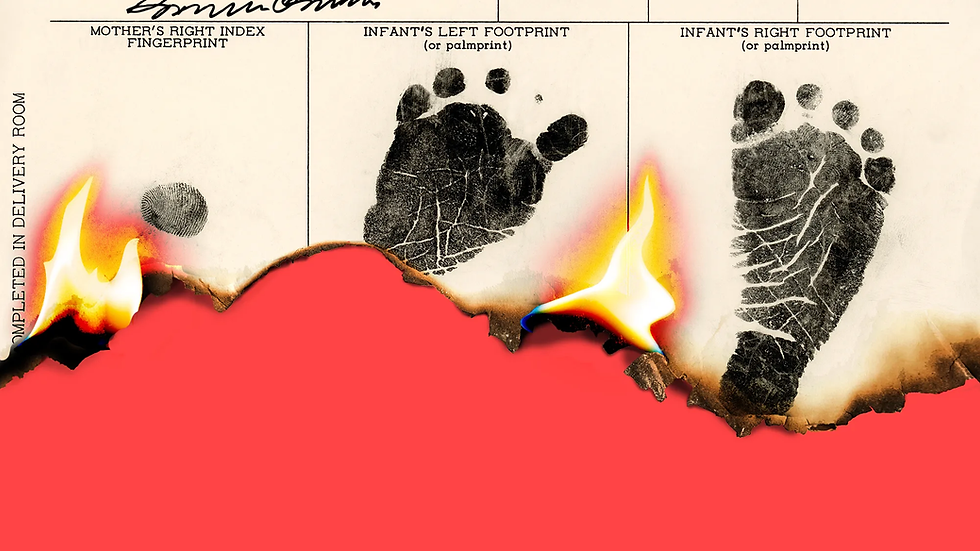
Introduction For over a century, America’s citizenship policy has reflected a deliberately simple philosophy: that a person born in the United States is necessarily a citizen of the United States. These principles are now at the heart of a deeply divisive debate over presidential power.
On August 6, 2026, President Donald Trump will issue two executive orders that would effectively limit the franchise of birthright citizenship in a number of ways. One order would strip citizenship from children whose parent falls within particular classes, including foreign-government employees and individuals who have engaged in commercial transactions or fraud to gain citizenship. The administration will also take steps to restrict what it refers to as “birth tourism.”¹ Just days later, a federal court will block the new rules, finding that they were almost certainly unconstitutional with respect to the children identified in the order, because the constitutionality of the orders had been decided by the Supreme Court in relation to those children.²
Can an executive order construe the Constitution away? The Citizenship Clause
The Fourteenth Amendment was adopted in 1868, in part because of concerns about the political status of newly emancipated slaves. By declaring that “[a]ll persons born or naturalized in the United States, and subject to the jurisdiction thereof, are citizens of the United States,” the Citizenship Clause overturned long-standing legal traditions that tied one’s political status to ancestry, race, and other factors.³
The key language, “subject to the jurisdiction thereof,” was hardly an expansion of citizenship. Courts have long held that birth on American territory does not automatically confer citizenship when the child is the legitimate offspring of foreign diplomats or members of a hostile occupying force.⁴ Nevertheless, the Citizenship Clause was viewed as a broad statement of policy when it was adopted. Over the course of more than a century, the interpretation of the Citizenship Clause has been tested several times.
Wong Kim Ark and the American Rule
In United States v. Wong Kim Ark in 1898, the Supreme Court was asked to interpret the Citizenship Clause in a dispute over the residency status of Wong Kim Ark, a Chinese American citizen who had been denied re-entry into the United States after a trip abroad. The Court ruled that a child born on American territory was an American citizen, notwithstanding the immigration status of his parents, with a few explicitly stated exceptions.⁵
The decision in Wong Kim Ark was significant for other reasons. By interpreting the Citizenship Clause to apply to virtually everyone born in the United States, the Court ruled that birthplace, not ancestry, citizenship, or immigration status, defined American citizenship.
This principle has since become a cornerstone of American constitutional law. For more than a century, it has served as the foundation for a coherent citizenship policy.
The Modern Challenge
The President’s proposals represent a direct assault on this policy framework. He argues that the Citizenship Clause does not apply universally to children born on American territory, and he seeks to adopt a restrictive interpretation of the phrase “subject to the jurisdiction thereof.” In practice, the August 2026 executive orders seek to roll back more than a century of precedent by identifying classes of individuals who would be excluded from citizenship despite being born in the United States.⁶
The problem with this approach is that it entirely too easily ignores the Constitution. An executive order from the President cannot repeal or override the Constitution. He has the responsibility to interpret and enforce statutes passed by Congress, but he does not have the constitutional authority to act contrary to the clear language of the Constitution. If the Citizenship Clause establishes a universal standard of citizenship, then he cannot adopt an alternative standard simply by virtue of an executive order.
That does not mean that every presidential action relating to citizenship is unconstitutional. The President has broad authority to manage immigration, enforce citizenship laws, and conduct America’s foreign affairs. Nevertheless, there is a critical difference between managing immigration and unilaterally amending the Constitution.
When Precedent Meets Presidential Orders
The problem with the President’s approach became even more apparent last June, when the Supreme Court ruled in Trump v. Barbara that children born in the United States to parents who were unlawfully or temporarily present in the country were nevertheless citizens at birth. The ruling marked the beginning of the end for the President’s plans to alter America’s citizenship policy. The subsequent executive orders sought to identify more narrowly defined groups of individuals who would be ineligible for birthright citizenship. Nevertheless, Judge Deborah Boardman ruled last week that the latest executive order was almost certainly unconstitutional with respect to the children in the certified class, because the Supreme Court had already ruled that those children were citizens at birth.²
The dispute therefore reflects a fundamental tension between the different branches of government. The President is attempting to interpret the Citizenship Clause in a manner that is completely at odds with the interpretation advanced by the Supreme Court. The problem with this approach is that it entirely too freely ignores the decisions of the Court.
At the most basic level, this dispute is about whether the Constitution really does require a uniform standard of citizenship. In its simplest terms, the dispute involves a choice between two different citizenship policies, one set out in the Constitution and one set out in the President’s executive orders.
Citizenship as a Constitutional Status
There is another reason why this dispute is about something more than just immigration. Many aspects of the federal government are governed by ordinary statutes that can be amended or repealed by Congress. Tax policy is one obvious example, as is the regulation of immigration and naturalization. Nevertheless, there are certain aspects of the Constitution that are considered to be outside the realm of ordinary politics. The Constitution establishes basic rules about who may become President, how Congress may be organized, and what rights may be granted to citizens.
When it comes to citizenship, the basic rule is set out in the Citizenship Clause. An immigrant’s status is defined primarily by statutes adopted by Congress. Nevertheless, there is an important distinction between the two. If the Constitution says that a person is a citizen, that status cannot be freely revoked by members of the opposite party simply because they happen to be in the majority when a presidential election takes place. That is why citizenship is governed by the Constitution rather than ordinary statutes, 1because its very authority depends on its very permanence.
Why It Matters
The dispute over birthright citizenship is ultimately a dispute over the Constitution itself. At the most basic level, it is a dispute about whether the President has the constitutional authority to reinterpret the Constitution in ways that contradict a long line of precedents.
The administration may believe that the Citizenship Clause has been wrongly interpreted. Congress may believe that the Court has interpreted the Constitution in a manner that is demonstrably unfaithful to the original understanding of the Framers. Nevertheless, both branches must accept that responsibility for interpreting the Constitution falls to the Court, not the President.
If the Court has definitively ruled that the Citizenship Clause establishes a universal standard of birthright citizenship, then that standard cannot be “modified” through executive action, unless and until Congress takes steps to amend the Constitution itself.
Exec. Order No. 14418, Continuing to Protect the Meaning and Value of American Citizenship (Aug. 6, 2026); Exec. Order No. 14419, Ending Birth Tourism (Aug. 6, 2026).
Barbara v. Trump, No. 8:25-cv-02070, preliminary injunction (D. Md. Sept. 2, 2026).
U.S. Const. amend. XIV, § 1.
United States v. Wong Kim Ark, 169 U.S. 649, 693 (1898). The Constitution Annotated identifies a number of narrow exceptions involving children of diplomats and children of hostile occupying forces.
United States v. Wong Kim Ark, 169 U.S. 649 (1898).
Exec. Order No. 14418, § 2 (Aug. 6, 2026).
Trump v. Barbara, No. 25-365, slip op. (U.S. June 30, 2026).
Reuters, “US judge blocks Trump’s newest order limiting birthright citizenship,” Sept. 2, 2026.


Comments